
లోక్సభ సీట్ల పెంపు: విస్తరణ కంటే ఎక్కువ — శక్తి పునర్విభజన
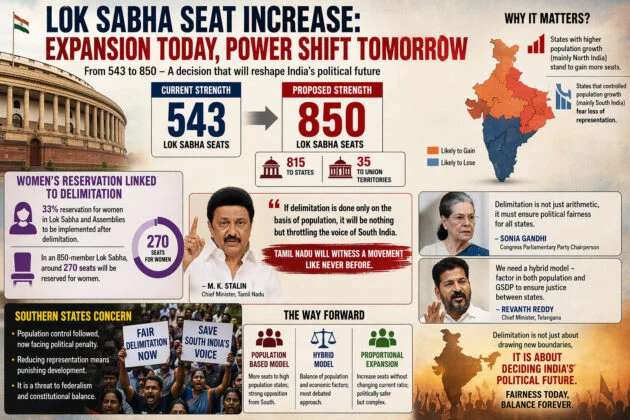
లోక్సభ సీట్ల పెంపు ఇప్పుడు దేశ రాజకీయాల్లో కేంద్ర చర్చగా మారింది. 543 నుంచి 850కి సీట్లు పెంచే కేంద్ర ప్రభుత్వ ప్రతిపాదనను కేవలం పరిపాలనా మార్పుగా చూడటం తప్పు. ఇది అసలు విషయానికి వస్తే రాజకీయ శక్తి సమీకరణాన్ని తిరగరాసే ప్రక్రియ. రాష్ట్రాలకు 815, కేంద్రపాలిత ప్రాంతాలకు 35 సీట్లు కేటాయించే ప్రణాళిక వెనుక గణితం సూటిగా కనిపించినా, దాని ప్రభావం మాత్రం చాలా లోతైనది. రాజ్యాంగంలోని అధికరణ 82 ప్రకారం ప్రతి జనాభా గణన తర్వాత డిలిమిటేషన్ జరగాలి. కానీ 1971 జనాభా ఆధారంగా కొనసాగుతున్న ప్రస్తుత వ్యవస్థలో అసమానతలు పెరిగాయి. 2001లో 84వ సవరణతో 2026 వరకు ఈ ప్రక్రియ నిలిపివేయబడింది. ఇప్పుడు కేంద్రం 2011 జనాభా ఆధారంగా ముందుకు రావాలని నిర్ణయించుకోవడం వేగాన్ని సూచిస్తోంది.
లోక్సభ సీట్ల పెంపు వల్ల ప్రధానంగా లాభపడేది ఎవరు అన్న ప్రశ్నకు సమాధానం స్పష్టంగా కనిపిస్తోంది. జనాభా పెరుగుదల ఎక్కువగా ఉన్న ఉత్తరాది రాష్ట్రాలు సహజంగానే ఎక్కువ సీట్లు పొందే అవకాశం ఉంది. అదే సమయంలో జనాభా నియంత్రణలో ముందున్న దక్షిణాది రాష్ట్రాలు తమ ప్రాతినిధ్యాన్ని కోల్పోయే పరిస్థితిని ఎదుర్కొంటున్నాయి. ఇది కేవలం సంఖ్యల మార్పు కాదు, రాజకీయ బలం కోసం ప్రాకులాట.
ఈ వార్తను కూడా చదవండి : డీలిమిటేషన్లో తేడా వస్తే అల్లకల్లోలమే: స్టాలిన్
లోక్సభ సీట్ల పెంపు వెనుక మహిళా రిజర్వేషన్ రాజకీయాలు
లోక్సభ సీట్ల పెంపు చర్చలో మహిళా రిజర్వేషన్ కీలక అంశంగా మారింది. 2023లో ఆమోదించిన మహిళా రిజర్వేషన్ చట్టం ప్రకారం 33% సీట్లు మహిళలకు కేటాయించాలి. 850 సీట్లలో దాదాపు 270 సీట్లు మహిళలకు రిజర్వ్ అవుతాయి. ఇది సంఖ్యల పరంగా చారిత్రాత్మక నిర్ణయం అయినప్పటికీ, అమలు విధానం వివాదాస్పదంగా మారింది.
మహిళా రిజర్వేషన్ను అమలు చేయడానికి డిలిమిటేషన్ తప్పనిసరి అని కేంద్రం చెబుతోంది. కానీ విమర్శకులు చెబుతున్నది వేరే. మహిళా రిజర్వేషన్ను స్వతంత్రంగా అమలు చేయవచ్చని, దానిని డిలిమిటేషన్తో ముడివేయడం అనవసర రాజకీయ వ్యూహమని వారు అభిప్రాయపడుతున్నారు. ఒకేసారి రెండు పెద్ద మార్పులను అమలు చేయడం ద్వారా కేంద్రం రాజకీయ ప్రయోజనం పొందాలనే ప్రయత్నం చేస్తోందన్న అనుమానం బలపడుతోంది.
ఇక్కడ అసలు సమస్య — ప్రాతినిధ్యం ఎలా నిర్ణయించాలి? జనాభా ఆధారంగానా, లేక అభివృద్ధి, పరిపాలనా సామర్థ్యం వంటి అంశాలను కూడా పరిగణలోకి తీసుకోవాలా అన్నది ఇప్పుడు ప్రధాన చర్చగా మారింది.
లోక్సభ సీట్ల పెంపు: దక్షిణాది ఆందోళనలు, జాతీయ సమాఖ్యకు సవాలు
లోక్సభ సీట్ల పెంపు పై దక్షిణాది రాష్ట్రాల ఆందోళనలు తీవ్ర స్థాయికి చేరుకున్నాయి. తమిళనాడు ముఖ్యమంత్రి M. K. Stalin స్పష్టంగా హెచ్చరించారు — జనాభా ప్రాతిపదికన మాత్రమే డిలిమిటేషన్ చేస్తే దక్షిణాది రాష్ట్రాల గొంతు నొక్కినట్టే. ఇది కేవలం రాజకీయ వ్యాఖ్య కాదు, ప్రాంతీయ అసంతృప్తి యొక్క స్పష్టమైన సంకేతం. తమిళనాడు, కేరళ వంటి రాష్ట్రాలు జనాభా నియంత్రణలో ముందున్నాయి. ఇప్పుడు అదే కారణంతో పార్లమెంట్లో ప్రాతినిధ్యం తగ్గితే, అది అభివృద్ధికి శిక్షగా భావించే పరిస్థితి ఏర్పడుతోంది.
ఈ దృక్పథాన్ని Sonia Gandhi కూడా బలపరిచారు. డిలిమిటేషన్ కేవలం అంకగణితం కాకుండా రాజకీయ సమానత్వాన్ని కూడా కాపాడాలని ఆమె అభిప్రాయపడ్డారు. ఇదే సమయంలో తెలంగాణ ముఖ్యమంత్రి Revanth Reddy ప్రతిపాదించిన హైబ్రిడ్ మోడల్ చర్చలోకి వచ్చింది. జనాభాతో పాటు ఆర్థిక సూచికలు (GSDP) కూడా పరిగణనలోకి తీసుకుంటే ప్రాంతీయ అసమానతలు తగ్గుతాయని ఈ మోడల్ భావిస్తోంది.
కానీ కేంద్రం పూర్తిగా జనాభా ఆధారంగా ముందుకు వెళ్తే, ఉత్తరాది-దక్షిణాది విభజన భావన మరింత బలపడే ప్రమాదం ఉంది. అది దేశ సమాఖ్య స్ఫూర్తిని బలహీనపరచే దిశగా నడిపించవచ్చు.
చివరికి లోక్సభ సీట్ల పెంపు అనేది సాంకేతిక నిర్ణయం కాదు — ఇది దేశ రాజకీయ భవిష్యత్తును నిర్ధేశించే కీలక మలుపు. సరైన సమతుల్యత లేకుండా తీసుకునే నిర్ణయం ప్రాంతీయ ఉద్రిక్తతలను పెంచుతుంది. కానీ సమర్థవంతంగా అమలు చేస్తే, భారత ప్రజాస్వామ్యానికి కొత్త దిశను చూపే అవకాశం కూడా ఇదే.
Lok Sabha Seat Increase: More Than Expansion — A Redistribution of Power
The proposed Lok Sabha seat increase from 543 to 850 is not just an administrative reform—it is a structural shift that could redefine India’s political balance. The Centre’s plan to allocate 815 seats to states and 35 to Union Territories may appear straightforward on paper, but its deeper implications are far more complex. Under Article 82 of the Constitution, delimitation is meant to follow every Census. However, India has continued with seat distribution based on the 1971 Census, creating growing disparities over time. The 84th Constitutional Amendment (2001) froze delimitation until 2026, but the Centre now appears ready to move ahead using 2011 population data.
The real question is: who benefits from this Lok Sabha seat increase? States with higher population growth—primarily in North India—stand to gain more seats. In contrast, Southern states that successfully controlled population growth now face the prospect of losing relative representation. This is not merely a numerical adjustment; it is a recalibration of political weight within the Union.
Lok Sabha Seat Increase and the Politics of Women’s Reservation
The Lok Sabha seat increase debate is closely tied to the implementation of the Women’s Reservation law passed in 2023, which mandates 33% reservation for women in Parliament and state assemblies. In an 850-member Lok Sabha, this would translate to roughly 270 seats reserved for women—a historic shift in representation.
However, the Centre has linked the implementation of this reservation to delimitation, making it contingent on redrawing constituencies. Critics argue this linkage is politically strategic rather than necessary. Women’s reservation, they say, can be implemented independently without waiting for a full-scale delimitation exercise. By combining both reforms, the government is effectively bundling a socially progressive move with a politically sensitive restructuring.
This raises a deeper question: should representation be based purely on population, or should it also account for governance quality, development outcomes, and federal balance? The Lok Sabha seat increase has brought this debate into sharp focus.
Lok Sabha Seat Increase: Southern Concerns and a Federal Test
The strongest resistance to the Lok Sabha seat increase is emerging from Southern states. M. K. Stalin has openly warned that a population-based delimitation would effectively silence the South. His argument reflects a broader concern: states like Tamil Nadu and Kerala followed national priorities on population control and are now at risk of being politically penalized for that success.
This concern is echoed by Sonia Gandhi, who has emphasized that delimitation must ensure political fairness, not just mathematical proportionality. Meanwhile, Revanth Reddy has proposed a hybrid model that factors in both population and economic indicators like GSDP, aiming to preserve balance between regions.
If the Centre proceeds strictly on population lines, it risks deepening the North-South divide, potentially straining the federal fabric. This is no longer just a technical exercise—it is a political stress test for India’s unity.
Ultimately, the Lok Sabha seat increase is about power—who gets it, how it is distributed, and whether the system can evolve without alienating large sections of the country. Done right, it could modernize representation. Done poorly, it could trigger long-term regional tensions.