
850 లోక్సభ సీట్లు.. భారీ మార్పుల దిశగా కేంద్రం అడుగు
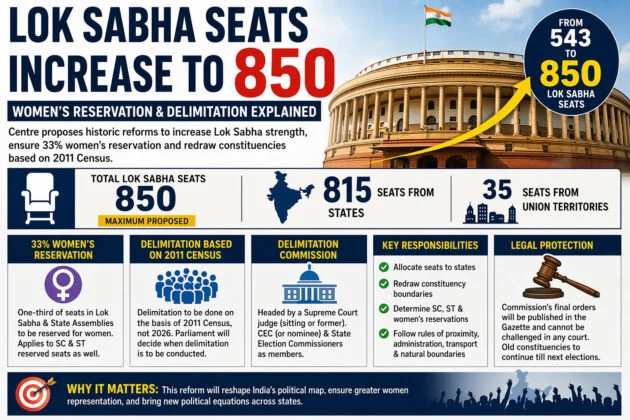
దేశ రాజకీయ వ్యవస్థలో కీలకమైన మార్పులకు నాంది పలికేలా కేంద్ర ప్రభుత్వం పెద్ద ఎత్తున సంస్కరణలకు శ్రీకారం చుట్టింది. మహిళలకు 33 శాతం రిజర్వేషన్లు అమలు చేయడాన్ని ప్రధాన లక్ష్యంగా పెట్టుకుని, లోక్సభ స్థానాల సంఖ్యను గణనీయంగా పెంచే ప్రణాళికను ముందుకు తీసుకువచ్చింది. ప్రస్తుతం ఉన్న 543 సీట్లను గరిష్ఠంగా 850కి పెంచే ప్రతిపాదనతో పాటు, నియోజకవర్గాల పునర్విభజన (డీలిమిటేషన్) ప్రక్రియను తిరిగి ప్రారంభించేలా మూడు కీలక ముసాయిదా బిల్లులను ఎంపీలకు పంపిణీ చేసింది.
భారీ విస్తరణకు రూపురేఖలు
ప్రతిపాదనల ప్రకారం, పెరిగే లోక్సభ స్థానాల్లో సుమారు 815 సీట్లు రాష్ట్రాలకు, 35 సీట్లు కేంద్రపాలిత ప్రాంతాలకు కేటాయించే అవకాశం ఉంది. అయితే రాష్ట్రాలవారీగా ఖచ్చితమైన సీట్ల సంఖ్యను బిల్లులో పేర్కొనలేదు. ఈ బాధ్యత పూర్తిగా డీలిమిటేషన్ కమిషన్కే అప్పగించబడనుంది.
ఇటీవల బీజేపీ నాయకులు “ప్రతి రాష్ట్రానికి 50% సీట్లు పెరుగుతాయి” అని చేసిన ప్రచారం బిల్లులో కనిపించకపోవడం గమనార్హం. జనాభా ప్రాతిపదికనే సీట్ల కేటాయింపు జరగనుందని స్పష్టమవుతోంది.
మహిళా రిజర్వేషన్కు కీలక అడుగు
ఈ సంస్కరణల వెనుక ప్రధాన ఉద్దేశ్యం మహిళలకు రాజకీయ ప్రాతినిధ్యం పెంచడం. లోక్సభతో పాటు రాష్ట్ర శాసనసభల్లో కూడా 33 శాతం సీట్లు మహిళలకు కేటాయించేలా బిల్లులు రూపుదిద్దుకున్నాయి. ఎస్సీ, ఎస్టీ రిజర్వేషన్లలో కూడా ఈ కోటా అమలు అవుతుంది.
అలాగే ఢిల్లీ, జమ్ము-కాశ్మీర్, పుదుచ్చేరి వంటి శాసనసభలు కలిగిన కేంద్రపాలిత ప్రాంతాల్లో కూడా మహిళా రిజర్వేషన్ అమలు చేయడానికి ప్రత్యేక నిబంధనలు తీసుకొస్తున్నారు.
2011 జనగణన ఆధారంగానే డీలిమిటేషన్
మరో కీలక అంశం – డీలిమిటేషన్ను 2026 జనగణన వరకు వాయిదా వేయకుండా, ఇప్పటికే అందుబాటులో ఉన్న 2011 జనాభా లెక్కల ఆధారంగా నిర్వహించాలని కేంద్రం నిర్ణయించింది. ఆలస్యం వల్ల రాజకీయ అసమతుల్యతలు పెరుగుతాయని భావించిన ప్రభుత్వం ఈ నిర్ణయం తీసుకుంది.
ఇప్పటివరకు ప్రతి జనగణన తర్వాత సీట్ల సర్దుబాటు చేయాలని ఉన్న రాజ్యాంగ నిబంధనలో కూడా మార్పులు ప్రతిపాదించారు. ఇకపై డీలిమిటేషన్ ఎప్పుడు జరగాలనే విషయాన్ని పార్లమెంటే నిర్ణయిస్తుంది.
Read this article also : రాజ్యాంగాన్ని నాశనం చేసేందుకు RSS-BJP ప్రయత్నం: Rahul Gandhi Raiganj Rally
డీలిమిటేషన్ కమిషన్కు విస్తృత అధికారాలు
సుప్రీంకోర్టు న్యాయమూర్తి ఆధ్వర్యంలో డీలిమిటేషన్ కమిషన్ ఏర్పాటు చేయబడుతుంది. ఇందులో ఎన్నికల ప్రధాన కమిషనర్ లేదా ఆయన ప్రతినిధి, సంబంధిత రాష్ట్రాల ఎన్నికల కమిషనర్లు సభ్యులుగా ఉంటారు.
కమిషన్ బాధ్యతలు:
- రాష్ట్రాలవారీగా లోక్సభ, అసెంబ్లీ సీట్ల కేటాయింపు
- నియోజకవర్గాల సరిహద్దుల పునర్నిర్మాణం
- ఎస్సీ, ఎస్టీ, మహిళా రిజర్వేషన్ల నిర్ణయం
ప్రతి రాష్ట్రం నుంచి ఎంపీలు, ఎమ్మెల్యేలతో కూడిన అసోసియేట్ సభ్యులు సలహాదారులుగా ఉంటారు. కానీ తుది నిర్ణయాధికారం మాత్రం కమిషన్కే ఉంటుంది.
కఠిన ప్రమాణాలతో నియోజకవర్గాల పునర్విభజన
డీలిమిటేషన్ ప్రక్రియలో భౌగోళిక సమీపత్వం, పరిపాలనా సౌలభ్యం, రవాణా సదుపాయాలు వంటి అంశాలు కీలకంగా పరిగణించబడతాయి. నదులు, కొండలు, జిల్లాల సరిహద్దులు వంటి సహజ పరిమితులను కూడా దృష్టిలో ఉంచుతారు.
ముఖ్యంగా ప్రతి అసెంబ్లీ నియోజకవర్గం పూర్తిగా ఒకే పార్లమెంటు నియోజకవర్గంలోకి వచ్చేలా చూడడం ఈ బిల్లులో ప్రత్యేకంగా ప్రస్తావించారు.
నిర్ణయాలకు చట్టబద్ధ రక్షణ
డీలిమిటేషన్ కమిషన్ తీసుకునే తుది నిర్ణయాలకు గెజిట్లో ప్రచురణ తర్వాత పూర్తి చట్టబద్ధ రక్షణ ఉంటుంది. వాటిని కోర్టులో సవాలు చేయడం సాధ్యం కాదు.
అయితే కొత్త సరిహద్దులు అమల్లోకి వచ్చినా, ప్రస్తుత సభలు రద్దయ్యే వరకు పాత నియోజకవర్గాలే కొనసాగుతాయి.
రాజకీయ ప్రభావం ఏమిటి?
జనాభా ప్రాతిపదికన సీట్ల పునర్విభజన జరిగితే రాష్ట్రాల మధ్య బలాబలాలు మారే అవకాశం ఉంది. ముఖ్యంగా ఉత్తర, దక్షిణ రాష్ట్రాల మధ్య ప్రతినిధిత్వ సమీకరణాల్లో పెద్ద మార్పులు రావచ్చు.
దాదాపు ఐదు దశాబ్దాలుగా నిలిచిపోయిన డీలిమిటేషన్ ప్రక్రియ మళ్లీ ప్రారంభం కావడం, మహిళా రిజర్వేషన్ అమలు దిశగా ముందడుగు పడటం—దేశ రాజకీయాల్లో కొత్త సమీకరణాలకు దారి తీసే అవకాశముంది.
850 Lok Sabha Seats: Centre Moves to Redraw India’s Political Map
In a major step that could significantly reshape India’s political landscape, the Union government has initiated sweeping reforms aimed at expanding the Lok Sabha and implementing 33% reservation for women. As part of this move, three key draft bills have been circulated to Members of Parliament, proposing a sharp increase in Lok Sabha seats and restarting the long-pending delimitation process.
Massive Expansion Plan
The proposal seeks to increase the strength of the Lok Sabha from the current 543 seats to a maximum of 850. Of these, around 815 seats would be allocated to states and up to 35 to Union Territories.
Notably, the draft does not specify state-wise seat allocation. That responsibility will rest entirely with the Delimitation Commission.
Despite earlier claims by BJP leaders that every state would see a 50% increase in seats, the bill makes no such guarantee. Instead, it clearly indicates that seat distribution will be based on population.
Core Objective: Women’s Reservation
At the heart of these reforms is the implementation of 33% reservation for women in both Parliament and state legislative assemblies. This quota will also apply within SC and ST reserved categories.
The proposal further ensures that Union Territories with legislatures—such as Delhi, Jammu & Kashmir, and Puducherry—will also implement women’s reservation.
Delimitation Based on 2011 Census
A crucial aspect of the reform is the decision to conduct delimitation based on the 2011 Census, rather than waiting for the 2026 Census. The Centre argues that delaying the process further is not feasible.
The draft also proposes removing the constitutional mandate that required seat readjustment after every Census. Going forward, Parliament will decide when delimitation should be carried out.
Wide Powers to Delimitation Commission
The Delimitation Commission will be headed by a sitting or former Supreme Court judge, with the Chief Election Commissioner (or nominee) and State Election Commissioners as members.
Its responsibilities include:
- Allocation of Lok Sabha and Assembly seats among states
- Redrawing constituency boundaries
- SC, ST, and women’s reservations
Each state will have 10 associate members (5 MPs and 5 MLAs), but they will serve only in an advisory capacity without voting powers.
Strict Criteria for Redrawing Boundaries
The Commission will follow strict parameters such as geographical contiguity, administrative convenience, and transport connectivity. Natural boundaries like rivers and hills, as well as district borders, will be taken into account.
A key provision mandates that every Assembly constituency must fall entirely within a single Parliamentary constituency—eliminating overlaps.
Legal Finality of Decisions
Once the Commission’s final orders are published in the Gazette, they will have full legal backing and cannot be challenged in any court.
However, existing constituencies will continue until the current legislatures are dissolved. By-elections, if any, will be conducted under the old boundaries.
Political Impact: A Structural Shift
Delimitation based on population is likely to alter the balance of power among states. Representation could shift significantly, especially between northern and southern states.
After nearly five decades of stagnation, the revival of delimitation combined with women’s reservation signals a major structural shift in Indian politics.
Bottom line: This is not a routine reform—it has the potential to redefine parliamentary representation, state-wise political strength, and gender inclusion in Indian democracy all at once.